.jpeg)
Is there a new light of safety in the UP gangland?
- Ashmit Singh and Tathagat Sharma
- Sep 27, 2020
- 4 min read
The crime rate in the state of Uttar Pradesh has been running high for a long time with the state being referred to as a gangland on multiple occasions and the Uttar Pradesh Special Security Force (UPSSF) is the UP government’s latest action in trying to improve this situation. On 26 June 2020, Chief Minister Yogi Adityanath announced the UPSSF Act 2020 which was passed by the state cabinet and formed the Uttar Pradesh Special Security Force.
The importance of this force can be understood when considering the directive passed by the Allahabad High Court in 2019 where the court gave suo moto cognizance to the rising crimes in the courts across the state which have led to severe accounts of obstruction of justice and called for action by the government. These courts along with other important premises such as the bureaucratic offices are currently under the protection of the UP provincial armed constabulary which has been overburdened with a lot of responsibilities and is therefore not able to carry out its duties properly. Therefore, the new special force which is to be formed in accordance with the UPSSF Act 2020 has been formed for the “better protection and security of a body or a person, or the residential premises notified by the state government, and vital installations including courts, administrative offices, shrines, Metro rail, airports, banks, other financial institutions, industrial undertaking, etc.” Establishing the requirement of this force, we must also understand why has this act been contested by the opposition. The main contention by the opposition to sections 10, 15, and 16 of the UPSSF Act granting several powers to the upcoming security force. Section 10 of the act has granted this force the power to arrest without a warrant and has been contested by the opposition. While the opposition has expressed concern over this power, it must be understood that similar forces to the UP Special Security Force have had the same set of powers including the CISF, the Odisha Industrial Security Force, and the Maharashtra State Security Cooperation. This power has also been limited to an extent where all of these forces cannot indefinitely detain a person and have to hand the person over to the nearest police station immediately. They can also detain a person without a warrant only if the person is obstructing the duty of the force which makes it very difficult to misuse this power. The more pressing concern according to the opposition was shown over Section 15 and 16 which offer “protection of actions taken in good faith” and “cognizance of offence” by the force and according to the opposition will allow the government to restrict the accountability of the action of the forces without the permission of the government. The opposition also believes that one will have to accept that whatever the force does is done in good faith which is very rhetorical since we already know UP stands at the third position in India regarding administrative corruption.
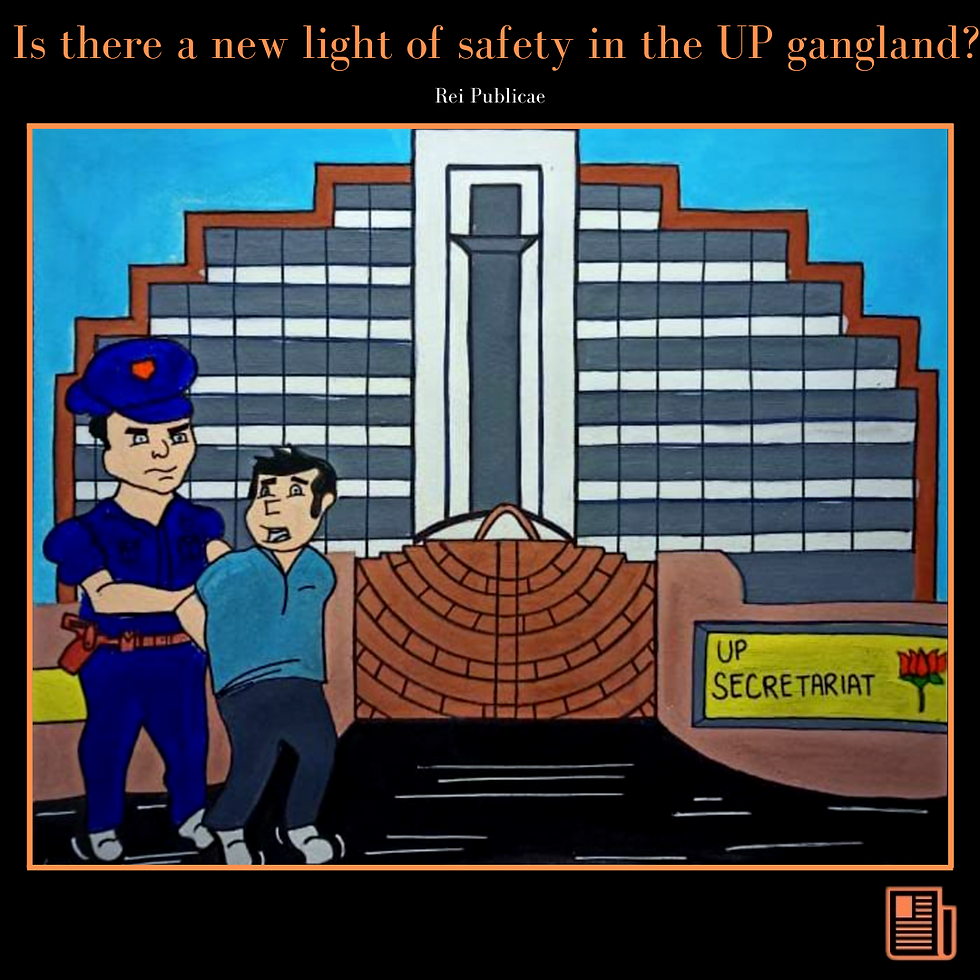
UP has also recorded the highest crime rate with 10% of India's total crimes in 2018-19, now putting this into perspective we can assume that the act indeed is needed in the unruly state of Uttar Pradesh but the level of corruption in UP might also lead to the misuse of the act by the same miscreants. While the opposition has continued to use this section to demonise the UPSSF, the failure here is to recognise the fact that the same power already rests with the Odisha Industrial Security Force and the Maharashtra State Security Cooperation as well. Therefore, the fact clearly portrayed here is that this force has been a necessity to the state of Uttar Pradesh and has been granted no power out of the ordinary. On the other hand, the opposition believes that the act has also done away with the role of the judiciary making it a mere spectator in cases of unlawful and unnecessary arrests and even taking away the power from the judiciary to prosecute any officer of the UPSSF, making the police more powerful than the judiciary hence making the division of power unbalanced. This is in contradiction to the fundamentals of democracy and to many it seems like the "start of the end of democracy".
The UPSSF Act of 2020 has continued to make the opposition anxious and many intellectuals divided regarding the necessity and standing of the act in a democracy like India. We have recently also witnessed the doing away of question hour by the central government and the passing of multiple bills within a single session. While many say that this has increased the productivity of the central government, several people also claim that this has destroyed the backbone of democracy and given the central government absolute power to aggressively push their agendas. Regardless of the accusations and clarifications on how the force is important in the state, the implementation of the act and the actions of the force will remain a matter of concern considering the various socio-economic tensions prevailing in the state and therefore only time can be the best judge of whether this Force is "a light of security in the state of Uttar Pradesh" or as the opposition has stated, "Rowlatt Act 2.0".


Comments