.jpeg)

Why were peaceful protesters killed in Nigeria
THE BACKSTORY Nigerians began demonstrating in early October, calling for the ban of a notorious police unit, the Special Anti-Robbery Squad (SARS), that has been long accused of violent harassment. The protests erupted after a video showed a SARS officer allegedly shooting a man in Delta state before driving off. Peaceful protests, organized under the hashtag #EndSARS, spread across the country of 206 million people and to Nigerian diaspora communities in the U.S. and Europe in solidarity with the movement. When the Lagos-based pop star Runtown urged a protest in support, in the commercial capital of Nigeria on October 8, many young people joined, calling on the government to “end SARS,” a police unit that was formed in 1992 to tackle armed robbery.

SPECIAL ANTI ROBBERY SQUAD (SARS) The idea behind the formation of the SARS unit was to combine surprise, the use of plainclothes officers, and a higher level of training. At first, it worked, reducing the spate of armed robberies. But as the years passed, the unit’s operatives became notorious for their brutality and corruption, extorting huge sums from people they claimed were criminals. Often, these were young men whose only crime was to be seen sporting tattoos or earrings and carrying laptops or smartphones.

Given SARS’s reputation, the anger at the latest outrage was immediate—first online and then on the streets. By the second week of October, the protests had coalesced into a movement that seemed to have gained almost universal support among Nigeria’s youth, none of whom claimed leadership. Online, the protest quickly found international support from celebrities like the rapper Kanye West, as well as the CEO of Twitter, Jack Dorsey.
THE RESULT OF THE PROTESTS
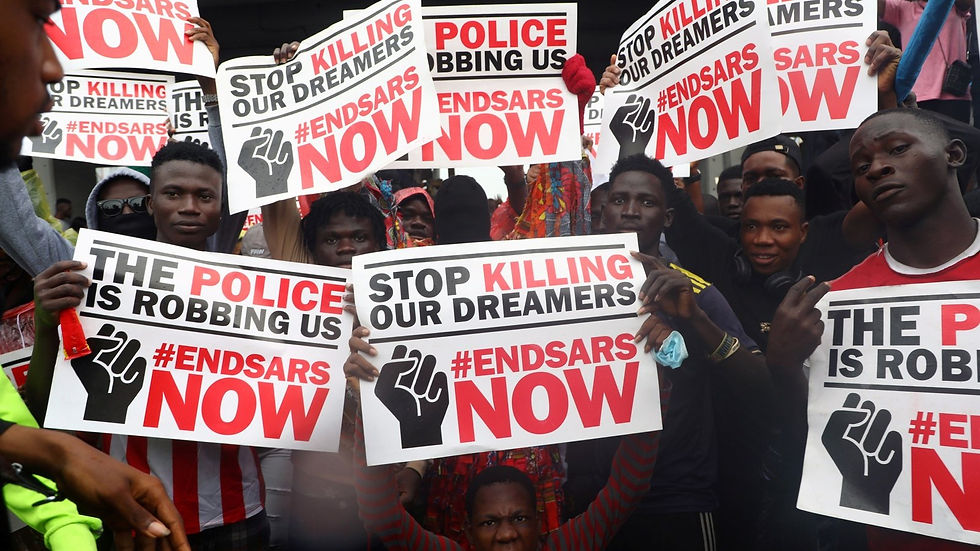
Spooked, on October 11 the inspector general of police announced the disbanding of SARS and its replacement by a new unit named SWAT (Special Weapons and Tactics). But this generation of tech-savvy Nigerians easily discovered after some sleuthing that there had been several such claims in the past that SARS was being dissolved, and that SWAT was an already existing unit. Almost immediately, the hashtag #EndSWAT joined the trending #EndSARS.
THE BRUTALITY ON THE PROTESTORS
By the evening of October 20, hope turned to unease. The first sign of trouble came when the state governor, Jide Sanwo-Olu, announced at 12 PM that a curfew would begin at 4 PM—notice too short in a city famous for its traffic jams. Later, a photo of a man removing fixed cameras from the toll gate, a landmark in Lagos, went viral. The last ill-omen came when, before nightfall, both the electronic billboard over the toll gate and the streetlights went dark. Suspecting foul play afoot, some people urged their peers to leave. Hours after that, the shooting started. In videos recorded that night, you hear the gunfire and see people running for safety. One video appears to show the soldiers firing, but the pandemonium and low light levels meant that none of the blurry images tell a conclusive story.
GOVERNMENT'S RESPONSE

The confusion allowed Governor Sanwo-Olu to deny both that there had been any fatalities and that he had been responsible for the incident; later, he said one person had died and admitted to CNN that the military had been present. His prevarications created a clamor for President Buhari to respond—as the titular chief of the armed forces, the only person with the legal authority to order military action. For its part, the army labeled news reports about its presence at the scene “fake news.” A senior officer said the videos circulating online were “photoshopped.” Later, a statement from the army claimed it had been called in by the Lagos state government.
MORE CONFUSION
On October 22, President Muhammadu Buhari, the former army general who was elected to office in 2015 and again in 2019, stunned Nigerian citizens with a televised twelve-minute speech. He began with a warning “to those who have hijacked and misdirected the…protest of some of our youths,” and ended by declaring that his government “will not allow anybody or groups to disrupt the peace.” On social media, the response was mostly shock: Was that all he had to say?
The initial denials and changing stories reflect a leadership unaccustomed to being held accountable by the citizenry. But that is changing as young Nigerians are refusing to accept the status quo. To them, a generation of out-of-touch gerontocratic leaders that cannot see the folly in claiming that live video footage has been photoshopped is unsurprisingly aligned with a police unit that cannot understand how young people, notably those in the tech industry, might be able to buy a car without dabbling in crime.
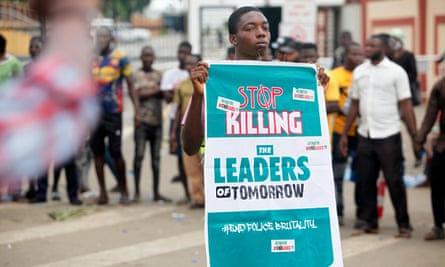
Nigerians had demanded a statement from the government after people all over the world watched via Instagram Live on October 20 as the army opened fire on a crowd of young people demonstrating against police violence at the Lekki tollgate in Lagos. Eyewitnesses reported up to fifteen dead. Who ordered the shooting of peaceful protesters in a democracy? Nigerians wanted to know. But the president ignored the subject in his speech.
MORE DAYS PASSED
As days passed and the protesters remained on the streets of Lagos and other states around the country, the coordination enabled by Twitter began to have real-world effects. Online volunteers supplied food to street protesters. A group of young women known as the Feminist Coalition posted a link for donations and, in days, raised over $350,000, which the group said was used to pay for food, drinks, and health care. A network of volunteer lawyers across the country helped win the release of arrested protesters.

Not everything was perfect: the dancing protesters at Lekki were accused of frivolity; the Feminist Coalition was accused of hoarding the funds donated (the group announced on October 22 they would stop accepting donations). On the other hand, a deeply divided, patriarchal society had come together across ethnic divisions and accepted a feminist group as central to the protest. Was it possible that the movement might bring with it a new, more equitable Nigeria?
WHAT HAS THE GOVERNMENT DONE?
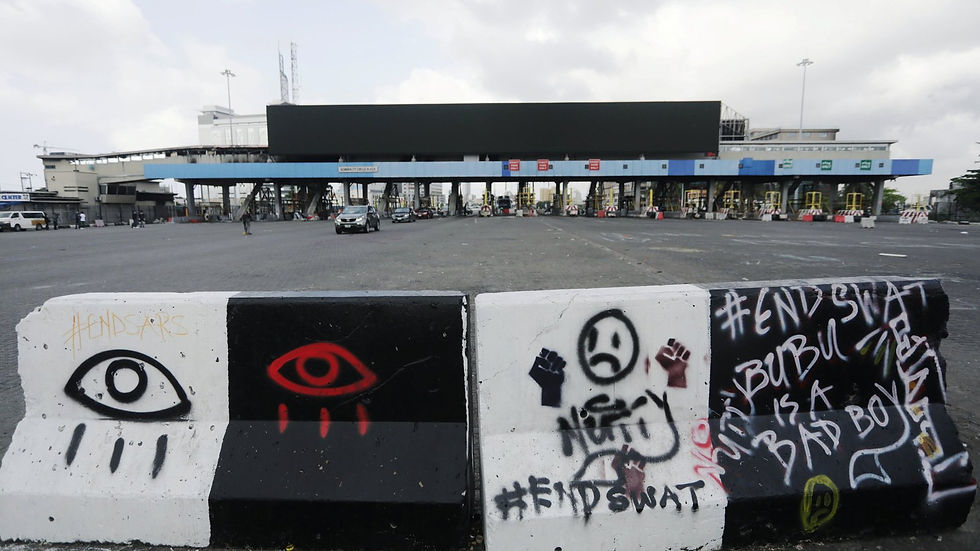
After the outrage that greeted President Buhari’s speech, the government has said it will launch an investigation into what happened at the toll gate, which was later set ablaze by persons unknown. But in a video that quickly went viral, a former governor of Lagos named Babatunde Fashola discovered a pristine camcorder perched on the ruins of the toll gate, untouched by bullets, fire, and rain. In the video, Fashola is seen picking up the device with a handkerchief and handing it over to current Governor Sanwo-Olu, saying it “will help with the ongoing investigations.” The former governor was roundly mocked on social media and nicknamed Fashlock Holmes. His clownery lent some comedy to a situation that is anything but funny: Lagos state government has inaugurated a panel of inquiry and restitution but none of the authorities have taken responsibility for the events of October 20.
THE CURRENT SITUATION
Clearly shaken by the violence and shocked by the president’s threatening speech, the protesters have quit the streets. The #EndSARS hashtag has ceased trending. A few young people still use it, but the assertiveness that reigned before what’s now called the Lekki Massacre has been extinguished. In its place are calls for an intervention by the International Criminal Court. Whether the Hague will do anything is unclear, but everybody knows that seeking justice against the government within the country is almost as futile as waiting for its president to say what the youth of his country need to hear


Comments